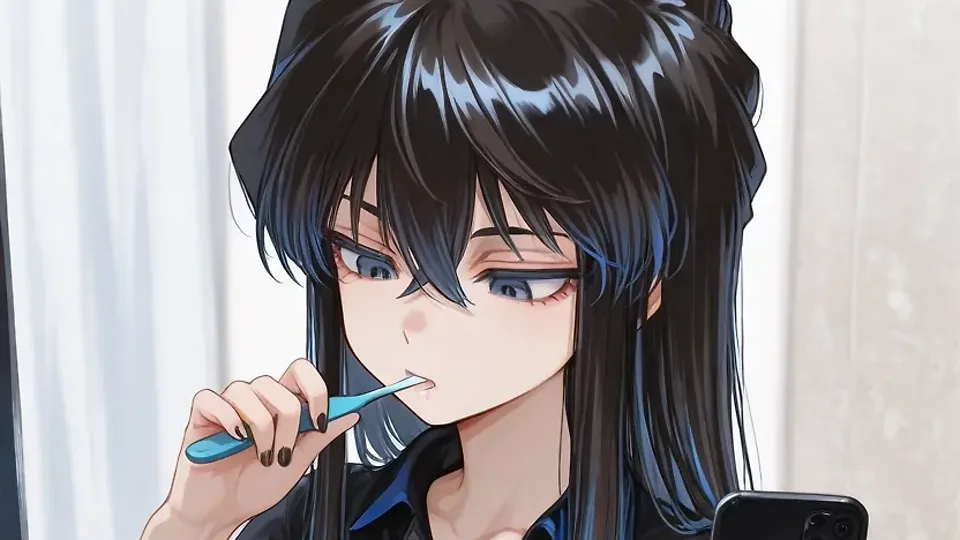
A Brief History of AI Anime Art: From Waifu Diffusion to Modern Checkpoints
2022: general-purpose models, mediocre anime
When Stable Diffusion first released publicly in 2022, it could technically draw anime-style characters, but the results were inconsistent -- warped faces, muddled line art, proportions that drifted between photorealistic and cartoon mid-image. The training data was broad and general-purpose, not anime-specific, so the model had seen relatively little of the visual language (cel shading, consistent line weight, specific eye/face proportions) that makes anime art read as anime.
The fine-tune that changed everything
The real inflection point came from community fine-tunes trained specifically on large anime and manga-style datasets, tagged using the same booru-style tagging convention that anime image boards had used for years. Suddenly prompting worked completely differently -- instead of writing natural-language sentences, you wrote comma-separated tags, and the model responded to them with far more precision than the base model ever had. Anime-specific checkpoints reliably produced clean line art, correct proportions, and consistent style in a way general-purpose models simply couldn't match.
This is the moment that set the template every anime checkpoint since has followed: train (or fine-tune) on a booru-tagged anime dataset, and prompt with tags instead of sentences.
The community checkpoint explosion
Once that formula was proven, the floodgates opened. Hobbyists and small teams started releasing their own fine-tunes, each with a different visual flavor -- some leaned toward soft painterly shading, others toward flat cel-shaded line art, others toward semi-realistic proportions. Because these were community-trained and freely shared, anyone with a decent GPU could pick a checkpoint that matched the exact style they wanted, rather than being stuck with whatever a single company shipped.
This period also standardized booru-tag prompting as the default for anime generation specifically -- it's the reason anime prompts still look like 1girl, silver hair, twintails, blue eyes, looking at viewer today rather than a natural-language sentence.
LoRAs: consistency without retraining a whole model
Fine-tuning a full checkpoint is expensive and slow, which put character-specific consistency out of reach for most individual creators. LoRAs changed that by allowing a small, targeted adapter -- trainable on a consumer GPU in a fraction of the time -- to be layered on top of an existing checkpoint. This is what made "the same character, dozens of poses and outfits" achievable for a single hobbyist rather than requiring a full model retrain, and it's arguably the single biggest unlock for anime AI art as a creative medium rather than a novelty generator.
SDXL and higher resolution
As base architectures scaled up, anime checkpoints followed -- moving from smaller, lower-resolution base models to larger architectures capable of sharper detail and better composition at higher native resolutions. Community fine-tuning caught up quickly each time a new base architecture released, repeating the same pattern: general-purpose base model releases, then an anime-specific fine-tune close behind that dramatically outperforms it for this particular style.
Now: video is going through the same cycle
Image-to-video and text-to-video models are currently going through almost exactly the same arc anime image models went through years earlier -- general-purpose video models exist, and anime/character-focused video fine-tunes and workflows are catching up fast, dramatically improving motion quality and character consistency over raw base models. If the image side is any indication, this gap will keep closing quickly.
Every video on WaifuTopia sits at the current end of that timeline -- image generation techniques refined over several years, now extended into motion. Worth remembering next time a five-second clip renders in a couple of minutes: three years ago, getting a coherent anime face out of these models reliably was still an open problem.